


- Home
- Blog (Repair Articles)
- The Ultimate Showdown: Ceramic Hybrid vs. Stainless Steel Fishing Reel Bearings
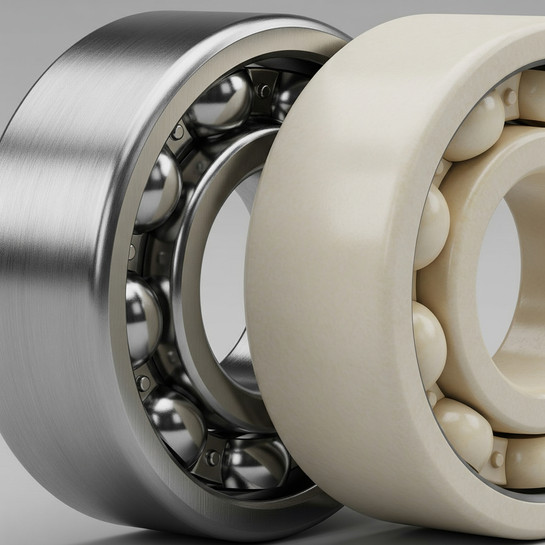
The Ultimate Showdown: Ceramic Hybrid vs. Stainless Steel Fishing Reel Bearings
Posted by Mike on 2025 Jul 22nd
The Ultimate Showdown: Ceramic Hybrid vs. Stainless Steel Fishing Reel Bearings
For any angler, the quest for the perfect cast and the smoothest retrieve is a journey of constant refinement. From the choice of rod and line to the intricacies of the reel's inner workings, every component plays a crucial role. At the heart of a high-performance reel lie the ball bearings, a topic of much debate and a key factor in its overall function. The two main contenders in this arena are the traditional stainless steel bearings and the increasingly popular ceramic hybrid bearings. This detailed guide will delve into the materials, performance characteristics, and practical considerations of each, helping you make an informed decision for your fishing needs.
Material Composition: The Building Blocks of Performance
The fundamental differences between these two types of bearings begin at the atomic level, with the materials used for the balls and races (the inner and outer rings).
Stainless Steel Bearings: The workhorse of the fishing industry, these bearings are typically crafted from 440C stainless steel. This is a high-carbon martensitic stainless steel that is chosen for its excellent hardness, wear resistance, and good corrosion resistance.
Ceramic Hybrid Bearings: As the name suggests, these are not fully ceramic. Instead, they feature ceramic balls, most commonly made from Silicon Nitride (Si3N4), housed within stainless steel races (often 440C, the same as their full-steel counterparts).
Speed, Performance, and Rolling Resistance: The Quest for the Farthest Cast
For many anglers, particularly those using baitcasting reels, casting distance is a primary concern. This is where the differences in material properties become most apparent.
Rolling Resistance: At its core, casting distance is a game of physics. A longer cast is achieved by maximizing the initial velocity of the lure and minimizing the forces that slow it down. One of the most significant of these opposing forces within the reel is rolling resistance. This is the friction generated as the balls roll along the races of the bearing.
The Ceramic Advantage: Ceramic hybrid bearings excel in this department. The Silicon Nitride balls are significantly rounder, smoother, and harder than steel balls.
Stainless Steel Performance: While high-quality stainless steel bearings offer smooth performance, they inherently have a higher rolling resistance compared to their ceramic hybrid counterparts. The microscopic imperfections on the surface of the steel balls and races create more friction, which can rob the spool of its momentum and slightly reduce casting distance.
Longevity, Wear Resistance, and Wear Factors: Built to Last?
A fishing reel is an investment, and its longevity is a key consideration. The ability of the bearings to withstand the rigors of frequent use, exposure to the elements, and the stress of fighting fish is paramount.
Corrosion Resistance: Here, ceramic hybrid bearings have a distinct advantage. Silicon Nitride is chemically inert and will not corrode when exposed to water, including saltwater. While the stainless steel races can still rust, the most critical rolling elements—the balls—are impervious. Stainless steel bearings, while resistant to rust, are not entirely immune.
Wear and Tear: The extreme hardness of ceramic balls makes them incredibly resistant to wear.
However, there is a crucial caveat: shock resistance. Stainless steel is a more ductile material, meaning it can deform under a sudden impact and is less likely to fracture. Ceramic, on the other hand, is more brittle.
The Role of Grease and Oil: Lubrication Strategies
Lubrication is essential for the smooth operation and longevity of any bearing, but the approach differs between the two types.
Stainless Steel Bearings: These bearings rely on a thin film of oil or a light grease to reduce friction and, just as importantly, to protect against corrosion. Grease offers longer-lasting protection and is often used in less-critical, slower-moving parts of the reel. For spool bearings, a light oil is preferred as it creates less resistance, allowing for maximum casting distance. Regular cleaning and re-lubrication are essential to flush out contaminants and maintain a protective barrier against moisture.
Ceramic Hybrid Bearings: One of the most touted benefits of ceramic hybrid bearings is their ability to be run with very light lubrication or even "dry" (with no lubrication).
The Verdict: Which Bearing is Right for You?
| Feature | Ceramic Hybrid Bearings | Stainless Steel Bearings |
| Performance | Superior - Lower rolling resistance, increased casting distance. | Good - Reliable and smooth, the industry standard for years. |
| Speed | Higher - Lighter balls and lower friction allow for faster spool speeds. | Standard - Good performance but limited by material properties. |
| Longevity | Excellent - Highly wear-resistant balls and impervious to corrosion. | Good - Durable, but susceptible to corrosion without proper care. |
| Wear Resistance | Excellent - Extremely hard ceramic balls resist wear. | Good - Hardened steel provides good wear resistance. |
| Maintenance | Lower - Less prone to corrosion, can be run with very light oil. | Higher - Requires regular cleaning and lubrication to prevent rust. |
| Cost | Higher - Advanced materials and manufacturing lead to a higher price. | Lower - More economical and widely available. |
| Shock Resistance | Good - More brittle and can be prone to fracture under severe impact. | Excellent - More forgiving and less likely to fail from sudden shocks. |
Ultimately, the choice between ceramic hybrid and stainless steel bearings comes down to your priorities as an angler.
Choose ceramic hybrid bearings if:
-
You are looking for the absolute maximum casting distance.
-
You are a performance-oriented angler who enjoys fine-tuning your equipment.
-
You frequently fish in saltwater and want superior corrosion resistance.
-
You are comfortable with a higher initial investment for long-term performance gains.
Choose stainless steel bearings if:
-
You are looking for a reliable, cost-effective option.
-
You are diligent with your reel maintenance and regularly clean and lubricate your bearings.
-
Your fishing involves extreme shock loads where durability is the absolute top priority.
-
You are a casual angler who may not notice the subtle performance differences.
Both types of bearings, when properly maintained, will serve you well on the water. However, for those seeking to push the boundaries of their equipment's performance, the technological advantages of ceramic hybrid bearings are hard to ignore.